
 Since 1997
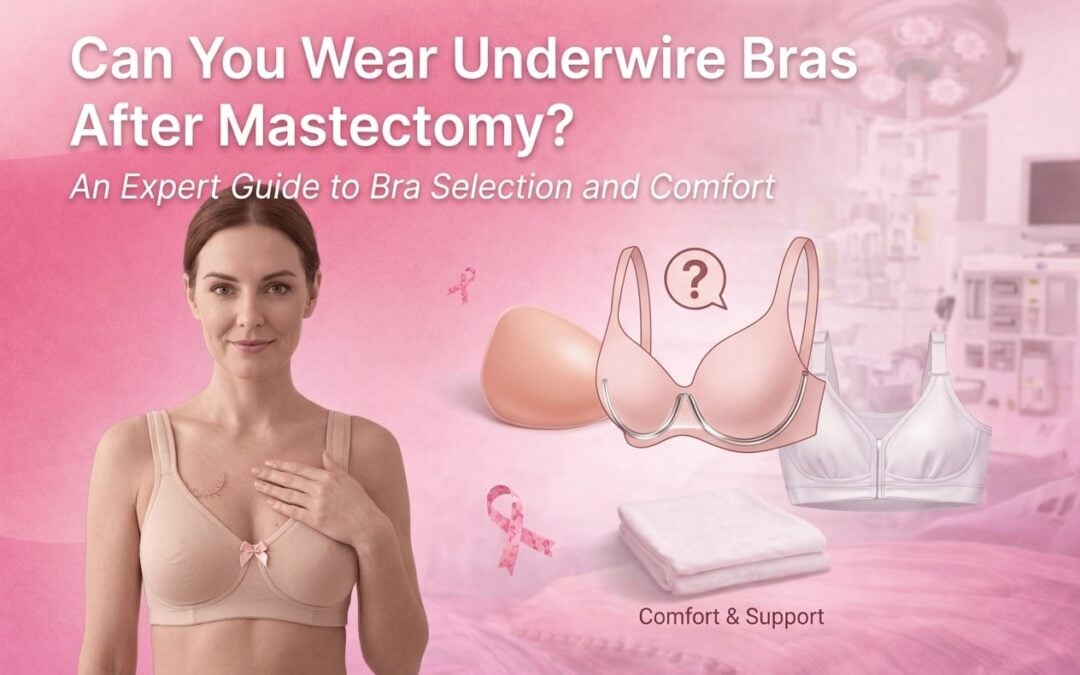
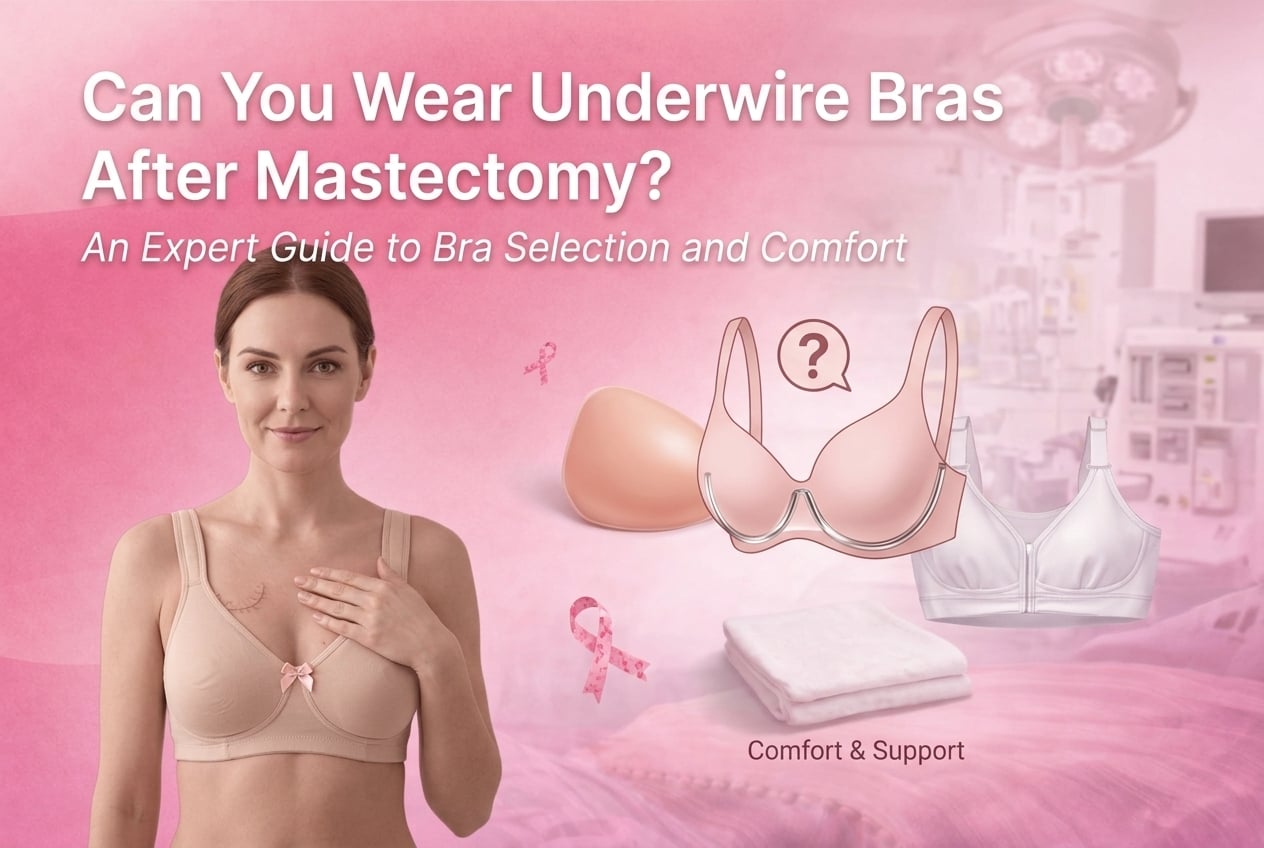
Getting dressed after breast surgery brings up questions the average bra fitting appointment never covers. The one that comes up most often in our shop: Can you wear an underwire bra after mastectomy? The honest answer is “sometimes, eventually, and only with the right design.” This guide walks through what surgeons actually say, what certified fitters look for, and which options give real support without compromising healing.
Key Takeaways
- Skip underwire bras for at least 6 to 8 weeks after surgery, and longer for some reconstruction types.
- Underwire can press on incisions, irritate scar tissue, affect lymphatic drainage, and shift a breast form out of place.
- Underwire mastectomy bras do exist, and they are built very differently from standard underwire styles.
- Your safe timeline depends on surgery type, scar location, and how your body is healing.
- A certified fitter can tell you if underwire is a good option for your body right now.
Why Surgeons Say “No Underwire” After Mastectomy
Ask ten breast surgeons about bras after surgery, and nine will say the same thing early on: no wires near the chest while it is healing. There is a practical reason behind that advice, and it is worth understanding before you shop.
Pressure on Incisions and Scar Tissue
An underwire sits right where most mastectomy incisions heal. The thin metal or plastic band pushes against fresh scars every time you breathe, lift, or bend forward. That can mean irritation, delayed healing, and pain that sticks around longer than it should.
Even once the skin looks closed, the tissue underneath keeps rebuilding for months. Pressure from a wire during that stage can reshape a scar in ways you do not want.
Interference With Lymphatic Drainage
Many women have lymph nodes removed during surgery. When that happens, fluid drainage changes. A tight underwire creates a compression line across the chest wall and side of the body. That line can slow drainage and raise the chance of swelling, which matters if you are working to prevent lymphedema.
Prosthesis Shifting and Discomfort
If you wear a silicone breast form, the underwire can tilt it forward or push it out of place. The wire sits where the natural breast root would have been, but a form needs room to rest flat against the chest wall. That mismatch leads to the form riding up, pulling down, or twisting throughout the day.
When Is It Safe to Wear Underwire Again?
There is no single safe date. Healing runs on its own schedule, and your surgeon is the one who signs off on it. That said, there are rough timelines worth knowing.
General Timeline: 6 to 8 Weeks Minimum, But It Depends
Most women can start thinking about underwire somewhere between 6 and 8 weeks after surgery. That is the floor, not the ceiling. Your body may need longer.
After Mastectomy Without Reconstruction
Healing tends to be on the shorter end, often 6 to 8 weeks. Scar location usually runs along the chest wall, which leaves room for a specially designed underwire that sits below the incision.
After Implant Reconstruction
Plan on 8 to 12 weeks or more. Implants settle into the chest pocket slowly, and early pressure from a wire can push them sideways. Your plastic surgeon is the person who decides when implants have reached their final position.
After Tissue Flap Reconstruction (DIEP, TRAM)
Flap reconstructions take the longest. Full healing can run 3 to 6 months because tissue was moved from another part of your body (usually the abdomen) to rebuild the breast. The donor site needs to heal, too. Wait until both areas feel settled.
After Lumpectomy
Recovery is faster here, often 4 to 6 weeks, because the surgery is less extensive. Scar location still matters. If your incision sits near the underwire line, hold off longer than the standard timeline.
Underwire bra after Mastectomy?: What’s Different About Them?
Here is where a lot of women get surprised. Underwire bras made for post-mastectomy bodies do exist, and they do not feel like the ones sitting in your drawer.
Wider Wires That Sit Below the Surgical Area
Regular underwire hugs the chest wall close to the breast fold. A well-designed mastectomy underwire uses a wider, flatter curve that sits lower and further out on the rib cage. The wire stays clear of most common scar lines.
Softer Frames and Cushioned Wire Channels
The wires themselves are flexible. Many are padded inside the fabric channel, so there is no hard edge pressing on tissue. Some brands use memory-flex wires that bend with your body instead of against it.
Pocketed Construction for Prosthesis Support
Every good mastectomy bra, with or without wire, has built-in pockets that hold a breast form in place. In an underwire version, those pockets are positioned to work with the wire, not against it. The form stays centered, and the wire stays where it belongs.
Brands That Make Great Underwire Mastectomy Bras
Several brands specialize in this space: Amoena, Anita Care, Nearly Me, and Wacoal each offer pocketed underwire styles. The right brand depends on your cup size, your breast form type, and how your body has changed since surgery. That is where a good fit helps most. If you are curious about form options, our custom breast forms page walks through the different types.
How a Certified Fitter Assesses Your Underwire Readiness
A post-surgery bra fitting is not the same as a standard department-store measurement. There is a lot more going on.
What We Look at During a Fitting
At A Fitting Experience, a certified fitter checks several things in a private fitting room:
- Scar location and healing status
- Chest wall contours (which often change after surgery)
- Breast form fit and pocket placement
- Whether the wire sits clear of any tender areas
- Band tension, strap position, and overall comfort
A proper post-surgical fitting takes time. You should not feel rushed through it.
Signs That Underwire Isn’t Right for You (Yet)
Here are the red flags a fitter watches for:
- Scars are still pink, raised, or sensitive to light touch
- The wire presses directly on tissue rather than on bone
- You feel numbness or tingling while wearing it
- A silicone form will not stay centered, even with adjustments
- Swelling shows up along the underarm or chest during or after wear
If you notice any of these, a wire-free option is the better call for now.
Alternatives to Underwire That Still Give Great Support
Wire-free does not mean droopy or unsupportive. Post-mastectomy bras have come a long way, and many women find they do not want to go back to underwire at all. You can also read real experiences on our client reviews page.
Molded Cup Bras Without Wire
These have a pre-shaped cup that holds its shape on its own. They give a smooth line under clothing and plenty of lift. Pair them with a pocket for a breast form, and they feel just as structured as any wired style.
Front-Closure Bras With Side Boning
Front closures are a lifesaver during recovery because you do not have to reach behind your back to hook the bra. Many have side boning, which is a soft, flexible support along the outer seam. It keeps the bra shape without pressing across the chest.
Sports-Style Bras With Compression Support
For exercise or high-activity days, a compression sports bra with pockets works well. Look for wide bands, padded straps, and stretch panels that move with you.
Frequently Asked Questions
Is it safe to wear an underwire bra after a mastectomy?
It can be, once you have fully healed and a proper fitting confirms the wire sits clear of your scar line. Most surgeons recommend waiting at least 6 to 8 weeks, sometimes longer, before trying one. Our breast form FAQs page covers more related questions, too.
How long after a mastectomy can I wear underwire?
It varies by surgery type. For mastectomy without reconstruction, 6 to 8 weeks is the usual minimum. For implant reconstruction, plan on 8 to 12 weeks or longer. Flap reconstructions like DIEP or TRAM often need 3 to 6 months. Always ask your surgeon before you start shopping.
Can underwire bras cause lymphedema?
Underwire itself does not cause lymphedema, but a poorly fitted one can add compression in areas where lymph nodes were removed. If you are at higher risk of swelling, fitters often recommend wire-free options or mastectomy-specific underwires designed to avoid pressure points.
Are there underwire bras designed for prostheses?
Yes. Brands like Amoena, Anita Care, and Nearly Me make pocketed underwire bras built specifically for breast forms. The wire shape, cup depth, and pocket placement are all tailored for post-surgery bodies.
What is the best bra to wear after breast reconstruction?
It depends on the reconstruction type and how far along you are in healing. Front-closure bras, soft-cup styles, and compression camisoles are common during early recovery. Once your surgeon clears you, molded wire-free bras and mastectomy-specific underwire bras are both solid choices.
Can I wear my old bras after a mastectomy?
Usually not. Your chest contours change after surgery, and old bras rarely fit the same way. A new fitting is worth doing before you try your old favorites again.
What bra gives the best support without underwire?
Molded-cup wire-free bras and front-closure styles with side boning are two strong options. A certified fitter can show you styles that give real structure without a wire.
Should I wear an underwire bra with breast implants?
Once your plastic surgeon clears you, yes, but the fit has to be right. Implants settle into place over weeks or months, and a poorly fitted wire can push them out of position. A post-surgery fitting helps make sure the wire sits below the implant edge.
How do I know if my bra is pressing on my incision?
Watch for red marks, tenderness, or itching along the wire line at the end of the day. If the skin feels sensitive after even a few hours of wear, the bra is not right. Tingling or numbness is another clear sign to stop wearing it.
Where can I get fitted for a post-mastectomy underwire bra?
If you are in South Florida, our Margate shop offers private in-person fittings with certified mastectomy fitters. Virtual fittings are also available for clients who cannot travel to the store.
Let A Fitting Experience Help You Find the Right Bra
The right bra after a mastectomy should feel like nothing. No digging, no shifting, no second-guessing how you look in a shirt. Getting there takes the right fit, and that is what our team does every day.
We help women find pocketed bras, breast forms, post-surgical garments, and more. Our staff handles insurance paperwork support where possible, bills Medicare directly, and welcomes both in-person and virtual appointments.
Call (954) 978-8287 to schedule a private fitting or request a call back. You have been through enough already. Let us handle this part.