
 Since 1997
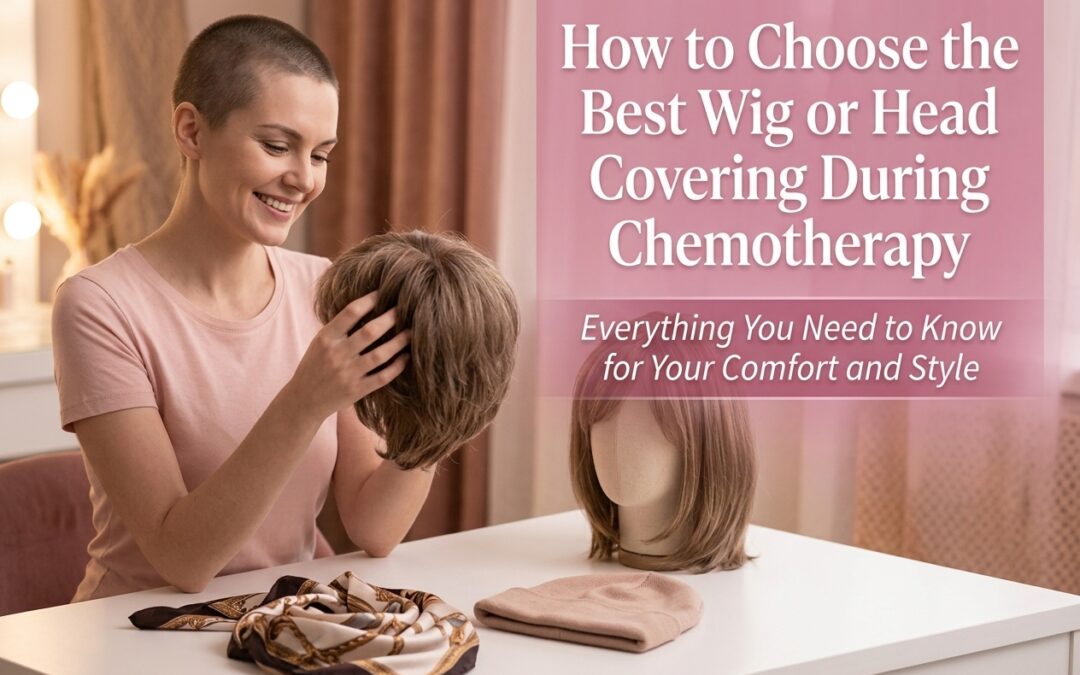
The best wigs during chemotherapy are the ones you choose before your hair starts to fall out, so you can match your natural color and style while there’s still something to compare to. Most women land on one of three options: a full wig (synthetic or human hair), a hat with hair attached, or a soft turban. Insurance often helps when your oncologist writes it as a “cranial prosthesis.” At A Fitting Experience in Margate, FL, certified fitters guide you through the choice in a private room, in-person or virtually.
Key Takeaways
- Shop before hair loss begins. Matching color, length, and texture is easier while your own hair is still there as a reference.
- Full wigs come in two families: synthetic (lower cost, holds its style, easy care) and human hair (natural look, more versatile, costs more).
- Hats with hair are the hybrid that many women love. A soft cap with hair attached at the back and sides, casual to wear, quick to put on.
- Insurance may cover a wig when your oncologist prescribes a “cranial prosthesis.” Ask for the prescription before you shop.
- A Fitting Experience offers private, unhurried try-on appointments for wigs, turbans, and hats with hair in Margate, FL, with virtual options for anyone who can’t travel.
Talk to a certified fitter: call (954) 978-8287 or request a call back.
When Should You Start Shopping for a Wig or Head Covering?
Here’s the deal: most women don’t think about a wig until their hair is already thinning. By then, matching color and style is harder, and the whole decision happens under pressure.
You don’t want that.
The better window is two to three weeks after your treatment plan is confirmed and before your first or second infusion. Your hair is still on your head. You can take photos, bring them in, even snip a small piece for color matching.
Why Shopping Before Hair Loss Is Easier
A few practical reasons to shop early:
- Color matching is exact instead of what is guessed.
- You have time to compare synthetic vs. human hair without rushing.
- If insurance is involved, you can get the cranial prosthesis prescription and paperwork squared away before hair loss starts.
- Emotionally, you feel prepared instead of caught off guard.
When Does Chemo Hair Loss Usually Start?
Most chemo-related hair loss begins around two to three weeks after the first treatment, though it depends on the drug and your individual response. Ask your oncologist for a specific timeline based on your protocol. That date becomes your shopping deadline.
What Are Your Head Covering Options?
There isn’t one right answer. Many women rotate between two or three options depending on the day, the weather, and the setting.
Full Wigs: Synthetic vs. Human Hair
Both look great when fitted well. The real difference is how they feel, how you style them, and what you pay.
| Feature | Synthetic Wig | Human Hair Wig |
|---|---|---|
| Price range | Lower | Higher |
| Style | Pre-set, holds shape after washing | Can be cut, curled, straightened, and colored |
| Care | Simple. Wash, shake, air dry | More involved, treat it like your own hair |
| Heat tolerance | Most can’t handle hot tools | Handles heat styling |
| Lifespan | Usually, 4 to 6 months of daily wear | Can last a year or more with care |
| Natural look | Excellent in newer fibers | Most natural overall |
Most women new to wigs start with a quality synthetic. It’s forgiving and low-maintenance, exactly what you want on the hard days.
Hats With Hair
A hat with hair is a soft cap or baseball-style hat with real or synthetic hair attached at the back and sides. The top is just the hat. They’re comfortable, quick to put on, and perfect for running errands, school pickup, or anywhere you don’t want a full wig.
Many of our clients say this is their go-to “around town” option.
Turbans
Turbans are soft, stretchy, breathable, and cool, which matters a lot in Florida. They come in solid colors, patterns, with or without decorative details. No hair attached, so the look is clean and intentional.
Pair a turban with earrings, a scarf, or both. Done.
Scarves and Wraps
Scarves give you the most variety. A single square scarf can be tied a dozen ways. There’s a learning curve, but there are short video tutorials online that cover the basics in five minutes.
Going Bare
Some women, after a few weeks of covering up, decide to just go bare. That’s a valid choice too. If you go that route, scalp care becomes the priority (we cover that below).
How Do You Pick What’s Right for You?
Let’s get practical. Start with the questions that actually matter.
Match It to Your Lifestyle
- Active or outdoorsy? A hat with hair or a turban. Wigs can feel warm during workouts.
- Back at the office or on camera? A quality wig, ideally with your pre-hair-loss style.
- Casual, at home, running errands? Turban, hat with hair, or bare.
You don’t have to pick one. Most women keep two or three on rotation.
Why Florida Heat Matters
South Florida changes the equation. A wig that feels comfortable in a 65-degree New England fall can feel stifling in Margate in August. If you’re here year-round, weight and breathability should be near the top of your checklist.
This is where synthetic lace-front wigs and turbans tend to win. Ask your fitter about breathable cap construction.
Budget by Option
Exact prices vary, but the general order (lowest to highest):
- Scarves and turbans
- Synthetic wigs
- Hats with hair
- Human hair wigs
If insurance covers part of a wig as a cranial prosthesis, that reshapes the math entirely. Ask about it before you assume anything.
Not sure which option fits? Book a private fitting: call (954) 978-8287 or visit our contact page.
Matching Color and Style
Bring a recent photo of yourself from the last six months. If your hair is still on your head, your fitter can match strand-for-strand. If it’s already thinning, the photo becomes the reference.
You can keep your current look or use this as a chance to try something new. Some women pick shorter, lighter styles for easier handling. There’s no rule here.
Will Insurance Pay for a Wig During Chemo?
Short answer: sometimes, yes. And it depends almost entirely on the paperwork.
The Cranial Prosthesis Prescription
When an oncologist writes your wig as a “cranial prosthesis” (not a “wig”) on the prescription, many insurance plans will consider it a covered medical item rather than a cosmetic purchase. The wording matters. Ask your oncologist directly for a cranial prosthesis prescription for chemotherapy-induced alopecia.
You’ll typically need:
- The prescription itself (with ICD-10 diagnosis code from your oncologist)
- An itemized receipt from the wig provider
- A claim form from your insurance company
Which Plans Typically Cover It
Coverage varies plan by plan, so we can’t promise what yours will pay. What we can do is help you organize the paperwork. At A Fitting Experience, our team handles insurance processing for mastectomy and related post-surgery products, and we can guide you through what your plan likely needs for a cranial prosthesis claim.
Call your plan’s member services line and ask three questions:
- Is a cranial prosthesis covered under my policy?
- What’s the allowed amount or cap?
- What documentation do I need to submit?
Write down the rep’s name and the date. Keep that note with your paperwork.
How Do You Care for a Wig and Your Scalp?
Washing, Storing, and Making It Last
Synthetic and human hair wigs have slightly different routines, but the basics are the same.
- Wash every 7 to 14 days of daily wear, or sooner if you exercise in it.
- Use wig-specific shampoo (regular shampoo can damage synthetic fibers).
- Never wring. Gently squeeze out water with a towel, then air dry on a wig stand.
- Store on a stand or mannequin head, not crumpled in a drawer.
- Keep it away from heat sources like ovens, steam, or open car windows in summer.
Scalp Care During Hair Loss
Your scalp is going to feel different. Dry, tender, sometimes tingly. A simple routine helps.
- Use a gentle, fragrance-free moisturizer or a light oil made for sensitive skin.
- Protect from sun. A soft cap, turban, or wig with UV-safe fiber all work.
- Keep nails short so you don’t accidentally scratch a tender scalp.
- If anything looks irritated or infected, call your care team. That’s a medical call, not a cosmetic one.
A soft cotton sleep cap makes mornings easier too. You’ll wake up and your head will feel cozier, not cold.
Try Before You Buy at A Fitting Experience
Catalog photos can only take you so far. Trying on a wig, a turban, a hat with hair (ideally in one appointment, side by side) tells you in about ten minutes what hours of scrolling cannot.
At A Fitting Experience Mastectomy Shoppe in Margate, FL, appointments happen in a private fitting room with a certified fitter. No rush, no showroom foot traffic, no one watching. If you can’t travel, we offer virtual fittings over video.
Bring:
- A recent photo of your usual hairstyle
- Your cranial prosthesis prescription (if you have it)
- Your insurance card
- A trusted friend or family member (optional, but many clients appreciate the second opinion)
We’ve been doing this since 1997. Most days we’re helping women figure out what feels right, one option at a time.
Ready to schedule? Call (954) 978-8287 or request a call back online. We’ll answer your questions first, book a time that works, and walk you through insurance paperwork if that applies.
Frequently Asked Questions
When should I buy a wig before chemo?
Ideally, two to three weeks after your treatment plan is confirmed and before your first or second infusion. That window gives you time to match color and style while your hair is still there and to handle any insurance paperwork without rushing.
How do I match a wig to my natural hair color?
Bring a recent photo and, if possible, a small clipping of your hair. A certified fitter can match color, length, and texture in person. If you’re shopping after hair loss has started, photos from the last six months are the best reference.
Is a synthetic or human hair wig better?
Neither is universally better. Synthetic wigs cost less, hold their style through washes, and are lower-maintenance. Human hair wigs look the most natural, handle heat styling, and last longer, but they cost more and need more care. Many women start with a quality synthetic.
Does insurance cover wigs for cancer patients?
Some plans do, especially when the wig is prescribed as a “cranial prosthesis” for chemotherapy-induced hair loss. Coverage varies by plan, so call member services and ask specifically about cranial prosthesis benefits, the allowed amount, and documentation requirements.
What is a cranial prosthesis prescription?
It’s a prescription from your oncologist that classifies a wig as a medical item for chemo-related hair loss rather than a cosmetic purchase. The wording “cranial prosthesis” plus the ICD-10 diagnosis code is what many insurance plans need to process a claim.
How do I keep a wig on during exercise?
Look for a secure cap with adjustable straps, a wig grip band worn underneath, or a hat with hair instead of a full wig. Many women switch to a breathable turban for workouts since wigs can feel warm during cardio.
Are turbans cooler than wigs in hot weather?
Yes. Turbans are lightweight, breathable, and sit close to the scalp without the extra cap structure of a wig. In Florida summers, turbans are the go-to for many women during the hottest months.
What are hats with hair?
A hat with hair is a soft cap or baseball-style hat with hair attached at the back and sides. The top is just hat fabric. They’re quick to put on, comfortable, and a popular choice for errands, casual outings, or anywhere a full wig feels like overkill.
How do I care for my scalp during chemo hair loss?
Moisturize gently with a fragrance-free product, protect from the sun with a cap or wig, keep nails short to prevent accidental scratching, and wear a soft sleep cap at night. Call your care team if anything looks irritated or infected.
Where can I try on wigs privately in South Florida?
A Fitting Experience Mastectomy Shoppe in Margate, FL, offers private fitting rooms with certified fitters who work with women through chemo-related hair loss. In-person appointments and virtual fittings are both available. Call (954) 978-8287 or request an appointment online.