
 Since 1997
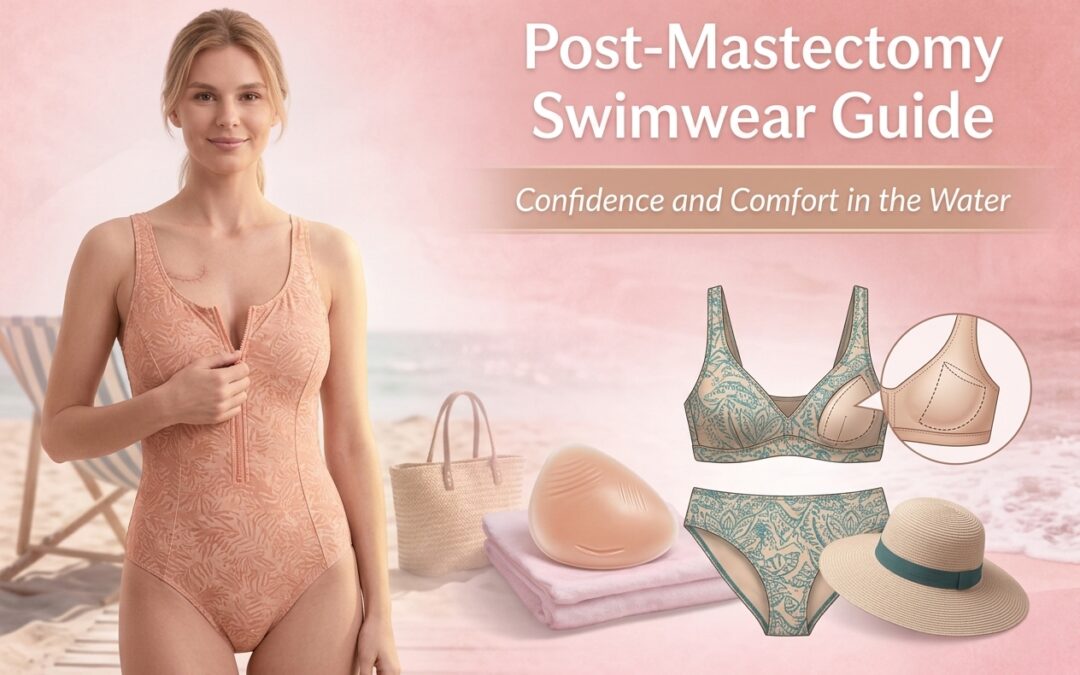
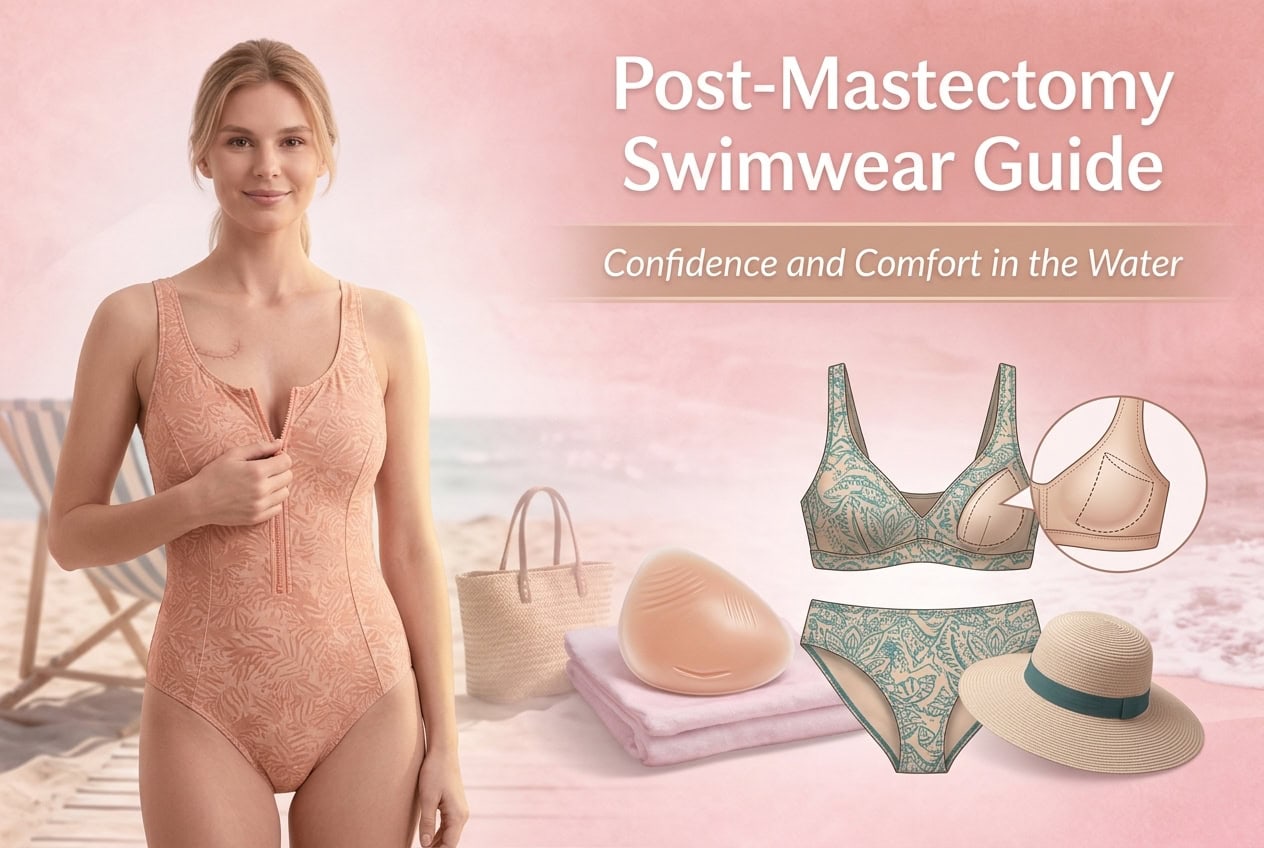
This post-mastectomy swimwear guide walks you through pocketed swimsuits, silicone and foam swim forms, scar-friendly necklines, chlorine-ready fabrics, and fit tips. Regular prostheses are not made for water, so a dedicated swim form plus a pocketed swimsuit keeps everything secure, balanced, and comfortable whether you are lap swimming, doing water aerobics, or sitting poolside in Florida.
Key Takeaways
- Pocketed swimwear has hidden fabric pockets sewn into the lining that hold a swim form snugly against your body.
- Your regular silicone prosthesis should stay dry; water can damage it, and it gets heavy in a suit. Use a dedicated swim form instead.
- Swim forms come in two main styles, silicone for natural weight and movement, and foam for ultralight comfort during active swimming.
- Look for secure pockets, adjustable straps, a higher front neckline, chlorine-resistant fabric, and UPF sun protection.
- A Fitting Experience in Margate, FL carries pocketed swimwear and swim forms, and our certified fitters can size you in a private room.
Why Regular Swimsuits Don’t Work After Mastectomy
A regular swimsuit has no pocket, no extra support on the reconstructed side, and usually a low neckline that can sit right on a scar. Slip your everyday breast prosthesis in there and you will feel it almost immediately, sliding, bunching, showing a line through the fabric.
That is not your problem. That is a design problem. Regular swimwear was simply not built with post-surgical bodies in mind. The right post-surgical fittings and the right swimsuit make a real difference.
What Happens When You Wear Your Regular Prosthesis in Water
Standard silicone breast forms are sealed, but they are made for dry wear inside a bra. Chlorine, salt, and sunscreen can slowly degrade the outer skin. Worse, the form traps water, becomes heavy, and pulls the suit down on one side.
Most fitters, ours included, tell clients the same thing: keep your daily prosthesis dry, get a dedicated swim form, and protect the investment you already made.
Why Pocket Design Matters More Than You Think
A pocketed swimsuit is built with a discreet fabric pouch sewn into each side of the lining. The swim form slides in, sits flat, and stays put even when you dive in or stand up after a float.
Without a pocket, a swim form is loose. One hard flip turn, and it can ride up, shift sideways, or float out. The pocket is the quiet hero of the whole system.
What Makes Mastectomy Swimwear Different?
Good mastectomy swimwear looks like regular swimwear on the outside. The features are inside, where they need to be.
Built-In Pockets and How They Hold Your Swim Form in Place
Pockets are usually sewn into the lining on both sides, even for a unilateral mastectomy. That symmetry matters; it keeps the suit from looking lopsided when you are not wearing a form on one side. The pocket opening is typically along the side seam or under the bust band, tucked where no one would spot it.
Some pockets have a small elastic edge to grip the top of the form. Others rely on the tightness of the suit to hold everything snug. Both work, and a good fitter will show you the difference in person.
Neckline, Strap, and Coverage Options for Scar Concealment
Higher necklines are the quiet request we hear most often. A scoop neck, a crossover, or a V-neck with a modesty panel can cover mastectomy scars and reconstruction lines without looking like a cover-up.
Straps matter too. Wider straps distribute weight better, a big deal when you are carrying a silicone swim form. Adjustable straps let you fine-tune as your body changes, which is common in the first year after surgery.
Tankinis are popular for a reason. Two-piece coverage without the exposure of a bikini, easier bathroom breaks, and flexibility if your top and bottom sizes do not match, something plenty of survivors deal with after treatment.
Fabric Features to Look For
- Chlorine-resistant fabric outlasts regular spandex by a long shot, worth it if you swim more than a few times a year.
- UPF 50+ sun protection is a quiet game-changer, especially for skin that has been through radiation and is more sensitive to sun.
- Quick-dry lining helps you change out of a wet suit without a long, chilly walk to the locker room.
- Soft, compressive fit gives mild support without digging into surgical areas.
Not sure where to start? Call us at (954) 978-8287 or schedule a fitting and we will walk you through the options in a private room.
Swim Forms Explained: Silicone, Foam, and Partial Shapers Post-Mastectomy Swimwear Guide
Here is where people often get stuck. There is no single best swim form, only the one that fits your body, your suit, and how you like to use the water.
Silicone Swim Forms for Natural Weight and Movement
Silicone swim forms look and feel close to a natural breast. They have weight, they move when you move, and they drape under a suit the way you would expect. For women who already wear silicone daily, this is the familiar choice.
A few things to know: silicone is heavier, which can pull on straps during a long swim. It is also water-resistant, not waterproof, so rinse it thoroughly after every pool or ocean trip.
Foam Swim Forms for Ultralight Active Swimming
Foam swim forms are the lightweight option, and they are often the favorite of women who do water aerobics, water walking, or real lap swimming. They do not waterlog, they rinse clean fast, and they dry overnight.
The trade-off is a less natural movement under the suit when you are standing on the pool deck. In water, nobody notices. On land, the slightly firmer shape can show if you are wearing a very fitted suit.
Partial Shapers for Lumpectomy and Reconstruction
If you had a lumpectomy or a reconstruction that left a small asymmetry, a full swim form is usually too much. Partial shapers, sometimes called equalizers, fill just the missing volume for a balanced look.
These are often thin, soft, and easy to adjust. They sit inside a pocketed suit the same way a full form does. A certified fitter can match the shape to your other side so the effect is subtle and symmetrical. Learn more about custom breast prosthesis options if off-the-shelf partial shapers are not quite right for you.
Quick Decision Table
| If you… | Consider | Why |
|---|---|---|
| Sit poolside and swim occasionally | Silicone swim form | Natural drape and weight for lounging |
| Swim laps or do water aerobics | Foam swim form | Lightweight, rinses clean fast |
| Had a lumpectomy or reconstruction | Partial shaper/equalizer | Fills only the missing volume for balance |
| Travel often or swim in warm climates | Foam form + UPF suit | Lighter to pack, more sun protection |
Practical Tips for Swimming With Confidence After Mastectomy
The first pool visit is always the biggest one. After that, it gets easier fast. These are the things our clients tell us they wish someone had said before their first trip.
Test Your Swim Form at Home in the Bathtub First
Fill the tub, put on your new suit and form, and move around the way you would in a pool. Lie back, sit up, stretch your arms overhead. This tells you if the pocket holds, if the neckline sits right, and if the form stays balanced.
It is a small thing, but it takes a huge amount of anxiety out of a public first swim. Do it in private, with good lighting and nobody watching.
Rinse After Every Use
Chlorine and saltwater are rough on both swim forms and suits. A thirty-second rinse in the shower right after you swim keeps the fabric soft and the form in good shape. Hang the suit to dry flat, not in direct Florida sun, which fades and stiffens swim fabrics over time.
Never write a silicone form. Pat it dry with a towel and let it air out before storing.
What to Do If Your Form Shifts While Swimming
It happens to everyone at some point. Nothing dramatic, just a little slide. Step out of the pool, walk to a bench or a towel, and adjust the suit at the bust line with a quick pull and tuck. A well-fitted pocket rarely needs this, but now you know the move.
If shifting happens repeatedly, the suit is most likely a size too big, or the pocket size does not match the form size. Both are fixable with a quick breast form FAQs review or a follow-up fitting.
What to Wear for Pool Exercise and Water Aerobics
For classes with a lot of jumping or arm work, most women prefer a foam swim form in a high-neck tankini or racerback one-piece. The lighter form means no tugging on one strap, and the higher coverage keeps everything where it should be through jumping jacks in the shallow end.
Swimming in Florida After Mastectomy: Year-Round Considerations
South Florida is a swim-every-month kind of place. That is a gift after surgery, the water is warm, the pools are everywhere, and exercise in water is easier on surgical scars than almost anything on land.
It also means your swimwear works harder than it would in most of the country. A couple of tweaks keep things comfortable.
Sun Protection, Heat, and Adhesive Form Challenges
Radiated skin is more sensitive. A UPF rash guard or a long-sleeve swim top over your pocketed suit can be a quiet lifesaver on the brightest days. Drugstore sunscreen is fine, but a mineral-based sunscreen is gentler on healing skin.
Adhesive breast forms, which stick directly to the chest wall, often struggle in South Florida’s heat and humidity. The adhesive loosens faster than it would in drier climates. Pocketed suits with a standard swim form are usually the easier choice here.
Pool Communities and Water Aerobics in South Florida
Plenty of our clients come from pool communities in Broward and Palm Beach counties, such as Margate, Coral Springs, Boca Raton, and Delray Beach. Weekly water aerobics classes are a big part of life, and most of the women in those classes are wearing a suit and form, not a hospital-looking compression garment.
If you are a snowbird who swims year-round, stash one foam form in your travel bag and keep your silicone daily prosthesis packed in its own case. You will use both.
Frequently Asked Questions
Can I swim with a regular breast prosthesis?
We would not recommend it. Daily silicone forms are water-resistant, not waterproof, and they get heavy when wet, which pulls on one side of the suit. A dedicated swim form is lighter, designed for chlorine and saltwater, and far more comfortable.
Will my swim form float?
Foam swim forms can be slightly buoyant, which most women find fine or even helpful. Silicone forms are closer to the weight of natural tissue and stay put. Either way, a properly sized pocket in your suit keeps the form in place, floaty or not.
What is the difference between a silicone swim form and a foam swim form?
Silicone swim forms are weighted, drape like natural tissue, and feel most like what women wear daily. Foam swim forms are ultralight, dry quickly, and are a favorite for water aerobics and lap swimming. Most women eventually own one of each for different activities.
Does insurance cover mastectomy swimwear?
Coverage varies by plan and plan year. Some policies cover swim forms as prostheses, some cover pocketed swimwear as part of a post-mastectomy benefit, and some cover neither. Our team can help review your policy before you buy. See our mastectomy bras insurance page for a starting point.
Can I wear a pocketed swimsuit without a prosthesis?
Yes. The pocket is empty and invisible from the outside, so the suit looks the same with or without a form. Many women go flat at the beach and wear a form at the pool, or vice versa. Your body, your call.
How do I care for my mastectomy swimsuit?
Rinse in cool water after every swim, hand wash with mild soap, and lay flat to dry. Avoid the dryer, avoid wringing the swimsuit, and keep the suit out of prolonged direct sunlight when it is not in use. Done consistently, a quality pocketed suit lasts one to two full swim seasons.
Can I do water aerobics after a mastectomy?
Most women can once their surgeon clears them, often around six to eight weeks post-op, though every recovery is different. Water exercise is gentle on scars and rebuilds the upper-body range of motion. Always get the all-clear from your own care team before starting.
What size swim form do I need?
A swim form is usually the same cup size or one size smaller than your daily prosthesis, since a swim form is worn under a snug suit rather than a structured bra. A certified fitter can size you quickly, and this is the fastest way to avoid a size return.
Do pocketed swimsuits look like regular swimsuits?
Yes, on purpose. Modern pocketed swimwear is made to be indistinguishable from standard suits. Same prints, same cuts, same fashion choices. Nobody at the pool knows unless you tell them.
Where can I try on mastectomy swimwear in Florida?
You are welcome to visit us at A Fitting Experience in Margate, Florida. We have private fitting rooms, pocketed swimwear in multiple styles, and both silicone and foam swim forms to try. Virtual fittings are available if you cannot make it to the store.
Shop Pocketed Swimwear at A Fitting Experience
You have been through a lot. The pool should be a reward, not another thing to worry about. A pocketed swimsuit and the right swim form make swimming feel normal again, which is often the whole point.
If you are not sure where to start, start with a fitting. Our certified fitters work with women at every stage, brand-new to surgery, five years out, first swim trip, and fiftieth. You can read what past clients have said on our testimonials page.
Call (954) 978-8287 or request a fitting online. In-person fittings happen in Margate. Virtual fittings are available anywhere in Florida and beyond.