
 Since 1997
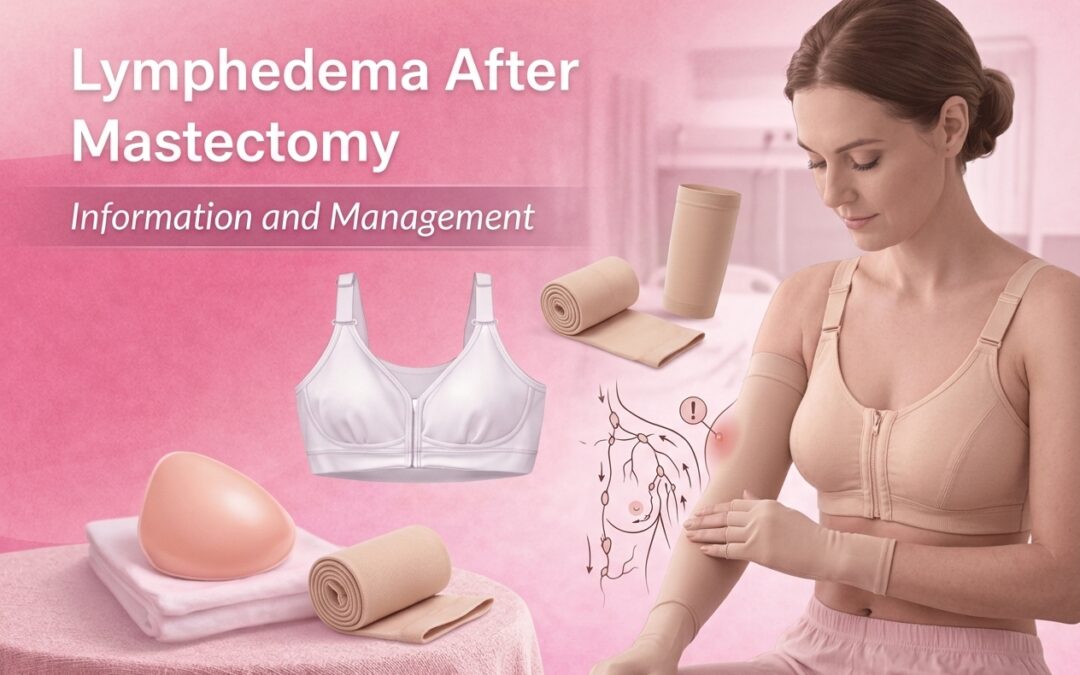
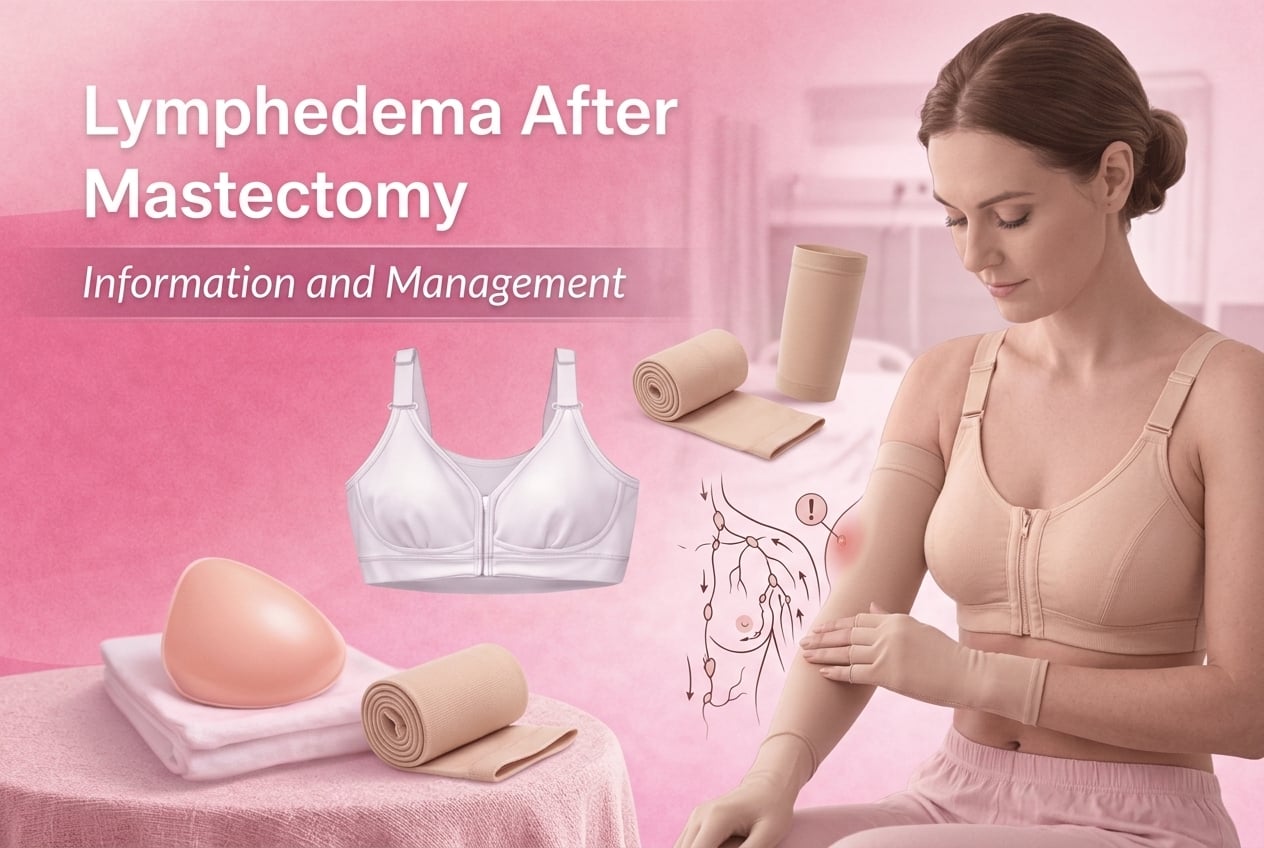
Lymphedema after mastectomy is swelling in the arm, hand, chest, or trunk caused by lymph node removal or damage. It can start quietly, sometimes years after surgery, and tends to get harder to manage the longer it goes unchecked. Catching early signs, protecting the affected side, and using properly fitted compression garments can keep symptoms far smaller.
Key Takeaways
- Lymphedema after mastectomy can appear months or even years after surgery, not just in the first weeks. Awareness stays a long-term habit.
- Early signs are subtle – a heavy feeling, tightness, or a ring or sleeve that suddenly fits differently on one side.
- Compression works – sleeves, gauntlets, bras, and wraps, but only when they are sized and fit by someone trained to do it.
- Medicare now covers compression garments for lymphedema under the 2024 Lymphedema Treatment Act update. Plan details and documentation matter.
- A certified fitter saves time and money – the right class, length, and style for your stage can turn a frustrating problem into a quiet routine.
What Is Lymphedema and Why Does It Happen After Mastectomy?
Lymphedema is a long-term swelling that shows up when the body’s lymphatic system can’t move fluid out of a limb or area fast enough. After a mastectomy, lumpectomy, or node dissection, some of that drainage network is disrupted. Fluid starts to pool. You may not notice it at first. Many women do not.
It is not rare. For anyone treated for breast cancer, especially with axillary node removal or radiation, it is one of the long-term conditions to stay aware of for life. The good news: it is manageable when you catch it early, and the right post-surgical fittings are part of your plan.
How Lymph Node Removal Disrupts Your Body’s Drainage System
Think of the lymphatic system like a quiet second circulation, one that runs alongside the veins. It carries protein-rich fluid back toward the heart. When underarm (axillary) nodes are removed, a section of that highway is taken out.
The body reroutes where it can, but reroutes are slower. Under stress – a flight, an infection, heavy lifting, a hot day – the system can fall behind. That is where the swelling starts.
Who Is Most at Risk?
Risk is higher if you have had:
- Axillary lymph node dissection (more nodes removed)
- Radiation to the chest wall or underarm
- A higher BMI at the time of surgery or after
- A past infection (cellulitis) in the arm on the surgery side
- A long gap without any swelling check-ins after treatment ended
Sentinel node biopsies carry a lower risk than full dissections, but lower is not zero. Anyone who has had breast surgery should know the early signs.
How to Recognize the Early Signs of Lymphedema
Here is the deal. The earlier you notice changes, the more room you have to keep things mild. Swelling you can control in its first few weeks is a different situation from swelling that has been hardening for a year.
Subclinical (Stage 0): What You Might Feel Before You See Anything
This is the phase most women miss. Nothing looks swollen. But something feels off. You might notice:
- A heavy or full sensation in the arm, underarm, or chest wall
- Clothes feel tighter on one side by the end of the day
- A ring that used to spin on your finger now has to be worked off
- Skin on the surgical-side arm that feels slightly warmer or looks a little shinier
Stage 0 is the sweet spot for action. Bring it up at your next oncology or primary care visit. Ask about a baseline measurement of both arms if you have not had one.
Stage 1: Visible Swelling That Goes Down With Elevation
At stage 1, you can see a difference. The arm looks puffier. Press the skin with your thumb, and it leaves a small dent (called pitting). Elevate the arm overnight, and the swelling is often noticeably smaller in the morning.
This is still a manageable stage. Compression, skincare, and careful movement often hold it right here for years.
Stages 2 and 3: When Swelling Becomes Persistent
Stage 2 swelling does not fully go down with elevation anymore. The tissue starts to feel firmer. Skin may thicken. Stage 3, also called lymphostatic elephantiasis, involves heavier tissue changes, skin folds, and a higher risk of infection.
These stages need a more involved plan, usually guided by a certified lymphedema therapist. Compression stays central to daily life. We will cover what that looks like below.
The Warning Signs You Should Never Ignore
Stop and call your care team the same day if you notice any of these on the surgical side:
- Sudden redness, warmth, or red streaks on the arm
- A fever with arm swelling
- Skin that feels hot and painful to touch
- A cut or insect bite that looks like it is spreading fast
These can be signs of cellulitis, a skin infection that needs prompt antibiotic treatment.
How to Reduce Your Risk of Developing Lymphedema
You cannot control what surgery is required. You can control what happens after. Most risk-reduction steps are small, daily habits.
Protect the Affected Arm (Blood Draws, Blood Pressure, Skin Care)
If it is practical, have blood draws, IVs, and blood pressure readings done on the non-surgical side. Not every clinician knows to ask, so it is fair to mention it yourself.
Skin care matters more than most people expect. Keep the arm moisturized. Clean small cuts right away. Use sunscreen. Wear gloves for gardening and cleaning. These boring habits prevent the kind of low-grade skin irritation that can tip a stable arm into a flare.
Why Exercise Actually Helps, Not Hurts
The old advice was to protect the arm by doing less. That has flipped. Controlled, progressive movement is now recommended. Muscles gently pump fluid through the lymphatic system, which is what you want.
Start easy. Build slowly. Strength training with light weights, walking, and yoga are usually well tolerated. Wear your compression sleeve during workouts if your therapist or fitter recommends it. Stop if the arm feels heavier, warmer, or tighter than baseline.
Weight Management and Its Role in Lymphedema Risk
Higher body weight puts a continuous load on the lymphatic system. Research connects a higher BMI with a higher risk of lymphedema developing or worsening. We mention it because it is one of the few levers that is actually within reach for many women, and small sustained changes are enough to matter.
What Products Help Manage Lymphedema?
Compression is the workhorse of daily lymphedema care. Not fashion compression. Not vaguely supportive sleeves from a general online store. Real graduated medical compression, fit to your measurements.
Compression Sleeves and Gauntlets: How They Work
A sleeve applies graduated pressure, firmest at the wrist, easing as it goes up the arm. That pressure differential encourages fluid back toward the body. A gauntlet (like a fingerless glove) covers the hand when swelling reaches the fingers.
Daytime sleeves are the classic. Nighttime garments look different: thicker, softer, foam-lined. They apply lighter pressure across a longer wear window. Many women need both, one set for the day and a different set for sleep.
Compression Wraps for Daytime and Nighttime
Wraps (sometimes called adjustable Velcro wraps or short-stretch bandage systems) are useful when swelling fluctuates a lot or when a sleeve alone is not cutting it. They let you fine-tune the pressure throughout the day. For many women in active treatment phases, a wrap and a sleeve work together, not as an either/or.
Compression Bras for Chest and Trunk Lymphedema
Lymphedema is not only an arm problem. Chest wall and trunk swelling are common after mastectomy, especially with radiation. A compression bra, or a post-surgical garment that crosses the chest and back, helps move fluid in that area the same way a sleeve helps the arm.
If you have never been told these exist, you are not alone. They are underprescribed. Ask about them. If you would like to see how custom breast prostheses pair with compression support, we can walk through options during a fitting.
Why Professional Fitting Matters: Too Tight Is Harmful, Too Loose Does Nothing
A sleeve that is too tight at the wrist can pool fluid in the hand. Too loose, and it does nothing. Wrong length, and it rolls, cuts in, and gets abandoned in a drawer. The garment has to match the shape of your arm on the day it is measured.
At A Fitting Experience, our certified fitters take the measurements, match you to the right compression class, and walk you through how to put the garment on without stretching out the seams. This is the step most people skip when they buy online, and it is why so many women have a shoebox of compression sleeves that never quite worked.
Does Medicare Cover Compression Garments for Lymphedema?
Yes, and this is relatively new. For years, lymphedema compression garments were not covered, which left many women paying out of pocket for a lifelong medical need. That changed.
The 2024 Medicare Coverage Update You Need to Know
Under the Lymphedema Treatment Act, Medicare began covering standard and custom compression garments for the diagnosis and management of lymphedema starting January 1, 2024. Covered items generally include daytime and nighttime compression, accessories, and a set number of replacement garments per year.
Exact coverage, copays, and quantity limits depend on your specific plan and your documentation. That last part is important: prescriptions and the diagnosis on file drive whether the claim goes through.
How A Fitting Experience Files Compression Garment Claims
We bill Medicare directly and work with most other major insurance carriers as part of our on-site billing process. Our team can help coordinate prescriptions and authorizations at your request. For a deeper walk-through of how benefits typically work for post-mastectomy products, see our page on mastectomy bras insurance. Plan benefits vary, so we verify coverage for your situation before you commit.
Ready to Get Fitted?
Schedule a private in-person or virtual fitting with our certified fitters. Call (954) 978-8287 or book through our contact page.
When to See a Certified Lymphedema Therapist
A fitter handles the garments. A certified lymphedema therapist (CLT) handles the clinical side: manual lymphatic drainage, multi-layer bandaging, patient education, and supervised exercise. The two work well together.
What does Complete Decongestive Therapy (CDT) involve
CDT is the gold-standard treatment. It has an intensive phase and a maintenance phase. The intensive phase typically runs for a few weeks and includes:
- Manual lymphatic drainage (a very specific, light massage technique)
- Short-stretch multi-layer bandaging between sessions
- Skin care education
- Targeted exercises
The maintenance phase is what you carry into daily life: your compression garments, skincare, movement, and follow-up fittings. That is where we come in.
How A Fitting Experience Works With the Margate Lymphedema Center
We are based in Margate, Florida, and regularly work with clients referred by local lymphedema therapists. If you already have a CLT, we collaborate with their recommendations on compression class, garment length, and style. If you do not have one, our team can point you toward South Florida options and help coordinate a first visit. Physicians can learn more on our ‘For physicians’ page.
Frequently Asked Questions
What are the first signs of lymphedema after mastectomy?
The earliest signs are often a heavy or full feeling in the arm, a ring or watch that suddenly fits tighter, or one sleeve feeling different from the other by evening. Visible swelling usually comes after these subtle changes.
How long after surgery can lymphedema develop?
It can start within weeks of surgery or show up many years later. The risk does not have a hard deadline, which is why awareness is a long-term habit, not a six-month checklist.
Can lymphedema be cured?
Not cured, but managed. With early action, compression, skin care, and movement, many women keep lymphedema at a mild, stable level for decades. Left unmanaged, it tends to progress.
What compression level do I need for lymphedema?
Compression classes are measured in millimeters of mercury (mmHg). Common ranges for lymphedema fall between 20 and 30 mmHg and 30 and 40 mmHg, but the right class depends on your stage, skin condition, and what a fitter measures. Self-prescribing a class is one of the top reasons garments get returned.
Does Medicare cover lymphedema compression sleeves?
Yes, as of January 1, 2024. Medicare covers standard and custom compression garments for a documented lymphedema diagnosis, with quantity limits and specific product categories. Your exact coverage depends on your plan and prescription documentation.
How often should compression garments be replaced?
A daily-wear sleeve usually needs replacement every six months or so, sometimes sooner if you are active, because the elasticity wears out over time. Nighttime garments last longer. Your fitter will give you a realistic timeline based on your wear pattern.
Can exercise make lymphedema worse?
Controlled, progressive exercise is now recommended. Sudden heavy lifting without conditioning can trigger a flare, which is where the old myth comes from. Build slowly, wear compression during workouts if advised, and stop if the arm feels different from baseline.
What is the difference between lymphedema and normal post-surgical swelling?
Post-surgical swelling is expected in the first several weeks and usually resolves on its own. Lymphedema is long-term, does not fully go away on its own, and tends to come and go based on activity, temperature, and infection risk.
Should I wear a compression sleeve on an airplane?
Many therapists recommend wearing a well-fitted sleeve for flights longer than a couple of hours, because cabin pressure and sitting still can trigger or worsen swelling. If you have never flown with lymphedema risk before, check with your fitter about the right class for travel.
Where can I get fitted for compression garments in South Florida?
A Fitting Experience Mastectomy Shoppe is based in Margate, Florida, with private fitting rooms, certified fitters, and on-site billing to Medicare and most other insurance carriers. We also offer virtual fittings for clients who cannot travel to the store.
Get Professionally Fitted for Compression Garments at A Fitting Experience
If you or someone you love is recovering from breast surgery and is starting to notice changes in an arm, chest, or trunk, please do not try to figure out compression garments alone. Fit is the whole game. The right sleeve, bra, or wrap, sized correctly, can turn a frustrating daily problem into a quiet background routine.
Our certified fitters at A Fitting Experience offer private in-person fittings in Margate and virtual fittings for clients across Florida and beyond. We bill Medicare directly and work with most major insurance carriers. Call (954) 978-8287 or request a call back through our contact page. You can also browse client testimonials to hear how fittings have worked for other women in similar situations.